Consultancy OS
The internal operating system for a two-person AI consultancy, built as one HTML file and a dependency-free PHP API in seven days.
- Category
- Internal tool, Rayden AI
- Status
- Internal
- Period
- Apr 2026
- Role
- Design, build, operate
- Stack
- HTMLVanilla JavaScriptChart.jsPHP 8JSON file storageMicrosoft GraphGoogle Places APIVapiTypeformCompanies House API
Context
Rayden AI was running on a spreadsheet and a group chat. We needed a pipeline, lead tracking, proposals, revenue, meetings and client workspaces, and I wanted to find out how far a single file could get a two-person firm before it needed a framework.
What I built
A 4,837-line index.html with thirteen tabs, sitting on 774 lines of PHP with no dependencies at all. State is a JSON file written under an exclusive lock with five rolling backups. Fifteen API actions, three inbound webhook receivers and five outside integrations: Microsoft Graph for tracked email and SharePoint client spaces with delta sync, Google Places for lead discovery, Vapi for outbound AI calls, Typeform, and a self-hosted nine-question audit that scores itself and creates a lead. The front end pulls exactly two things from a CDN.
- Data store
- Check or gate
- External service
The Graph service had a mock mode from day one, which meant I could develop and demonstrate the whole email pipeline without an Azure tenant. That one decision saved more time than anything else. Passwords are bcrypt at cost 12, failed logins lock the address out, and the web server denies every JSON file.
Outcome
Built in seven days in April 2026 and used internally. Three days into the build I started porting the back end to Next.js and Turso, keeping the same front end, and found Prisma costing thirty-six round trips a page where one batched libSQL call would do. That port later grew ReviewFlow on the same rails. The original still runs with a one-line PHP server.
What I’d do differently
A JSON file is not a database, and I knew it before I finished. It works at six leads and would not at six hundred. Sessions inside the same file meant every login rewrote the whole dataset. And the single-file constraint outlived its usefulness: at 88 functions in one script block I was scrolling to find things, which is why the port kept the file rather than fixing it.
Screens
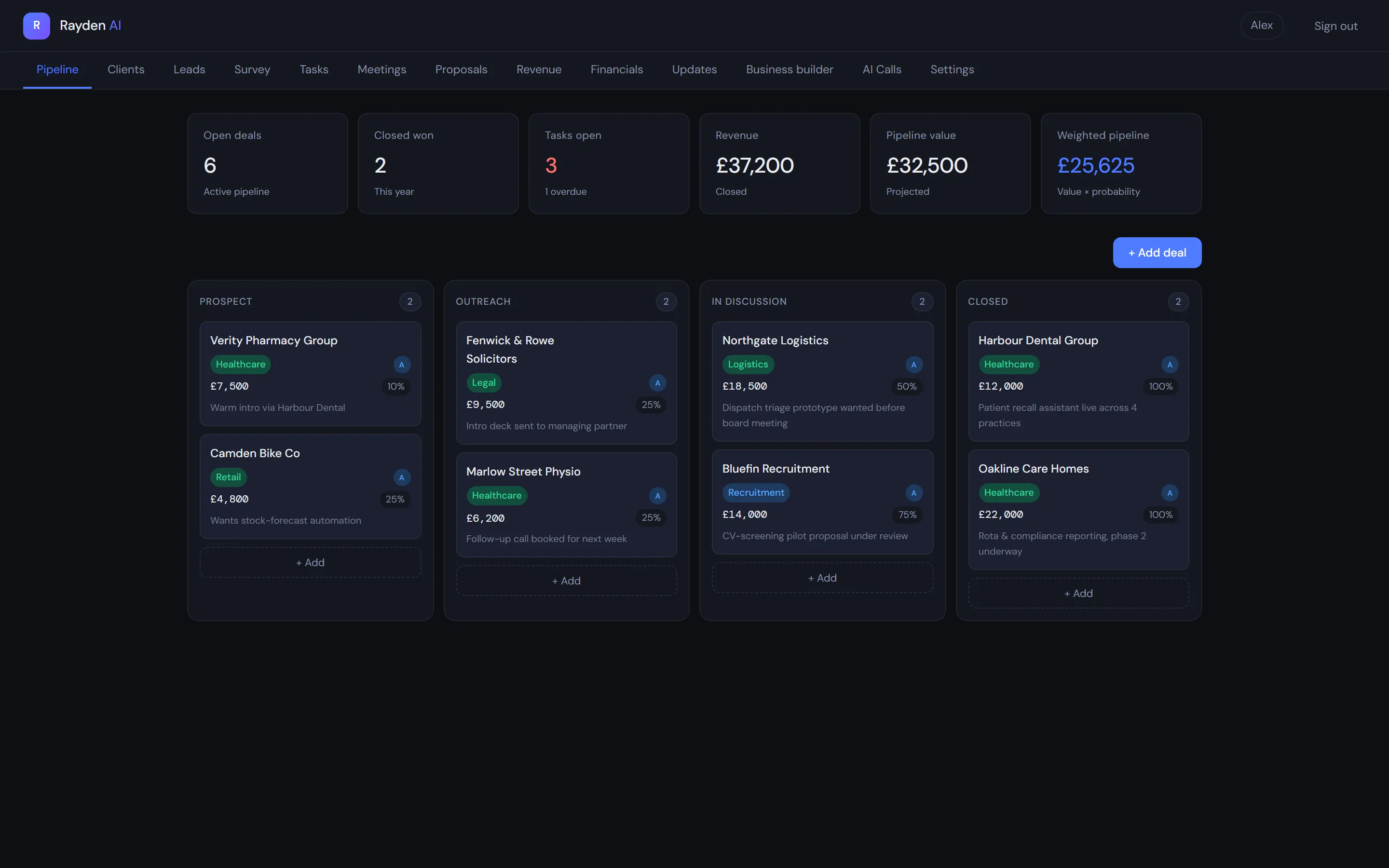
Pipeline. Drag and drop between stages, weighted value at the top. Each client gets its own board inside the workspace. The one chart in the app, on the Revenue tab. Lead finder over Google Places, results seeded here. Inbox for the public nine-question audit survey. Financials, per client.